Why IRATA?
Why IRATA Rope Access Continues to Set the Standard for Safety
When people first hear the term “rope access,” the reaction is often the same: it sounds dangerous.
After all, technicians are suspended hundreds of feet above the ground, working on wind turbines, offshore platforms, skyscrapers, bridges, and industrial structures. Yet the reality is the opposite.
IRATA rope access techniques have one of the strongest safety records in the entire work-at-height industry.
According to IRATA’s 2025 Work and Safety Analysis report, more than 33 million rope access hours were worked globally in 2024 across over 700 member companies. Despite this enormous volume of work, the industry continues to report exceptionally low incident rates.
So why is IRATA rope access so safe?
Safety Is Designed Into the System
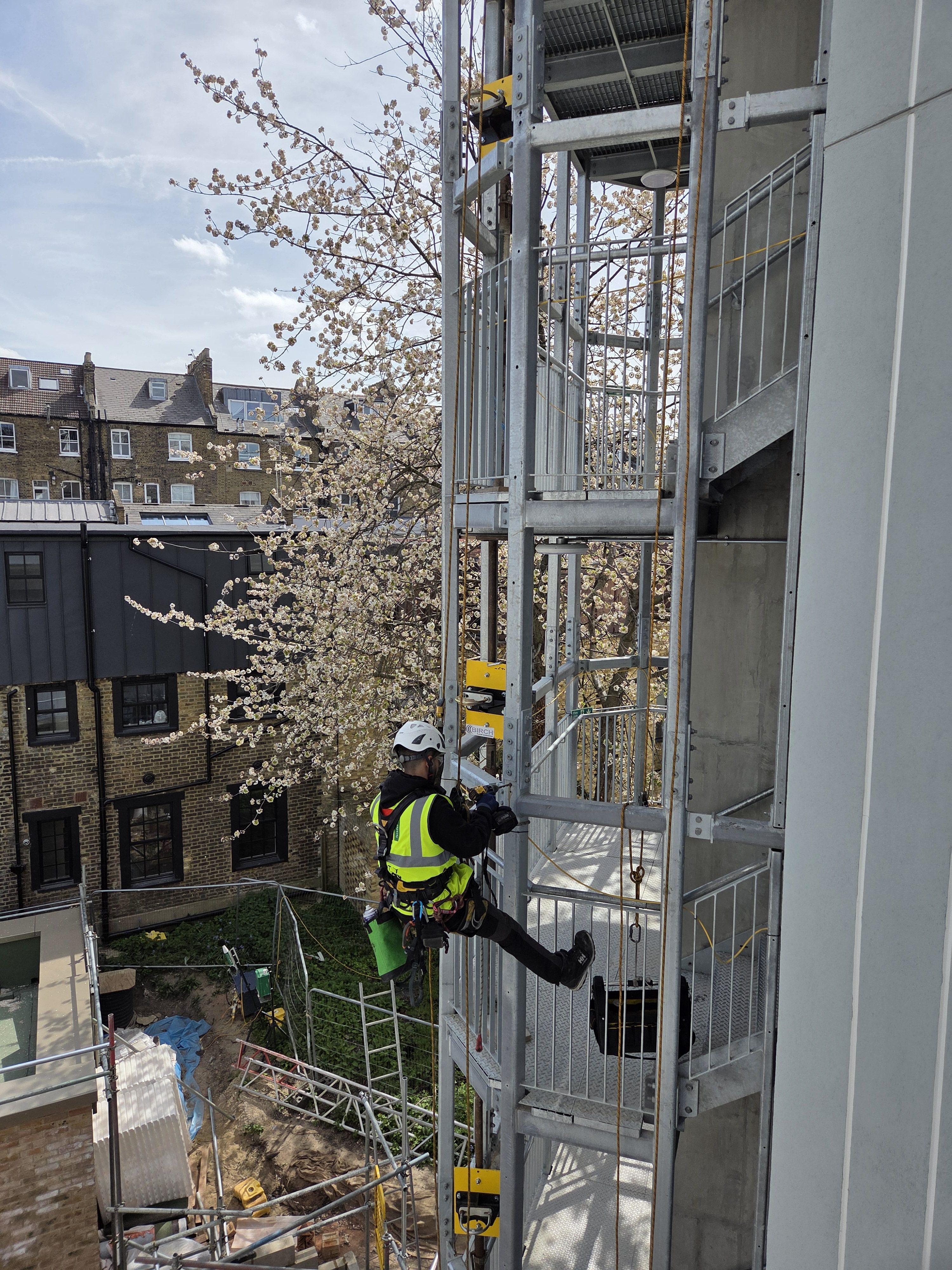
Unlike traditional access methods such as scaffolding or MEWPs, IRATA rope access is built around a system of multiple independent safety barriers.
Every technician works with:
- Two independently anchored ropes
- A primary working line and a secondary safety line
- Backup devices designed to arrest a fall if the primary system fails
- Pre-planned rescue procedures before work even begins
The principle is simple: no single failure should ever result in a serious accident.
This “double protection” philosophy is one of the key reasons why rope access consistently outperforms many conventional work-at-height methods.
Training and Competence Matter
IRATA’s safety record is not achieved by equipment alone. It is driven by the people using it.
Every IRATA technician progresses through a structured certification system:
- Level 1: Entry-level technician working under supervision
- Level 2: More experienced technician capable of complex rigging and rescues
- Level 3: Highly experienced supervisor responsible for planning, oversight, and rescue management
No rope access work is carried out without a Level 3 supervisor overseeing the operation.
This creates a culture where technicians are continuously trained, assessed, and monitored. Competence is not assumed—it is verified.
The Numbers Tell the Story
IRATA’s latest Work and Safety Analysis report covered:
- 33.6 million working hours
- More than 32,000 rope access technicians
- Over 700 participating member companies worldwide
The reported accident rate remains exceptionally low at approximately 0.8 incidents per 100,000 hours worked.
For comparison, many traditional access methods, particularly scaffolding-based work, continue to report significantly higher injury rates.
What makes these numbers even more impressive is that rope access is often used in the highest-risk environments:
- Offshore oil and gas
- Wind turbine maintenance
- High-rise building inspection
- Industrial shutdowns
- Confined spaces
- Remote or complex structures
Despite operating in these environments, IRATA continues to demonstrate that disciplined systems and strong supervision can dramatically reduce risk.
Human Factors Are the Biggest Risk
One of the most interesting findings from recent IRATA safety reports is that equipment failure is rarely the cause of incidents.
Instead, the majority of reported incidents are linked to human factors such as:
- Loss of concentration
- Failure to follow procedures
- Inadequate hazard identification
- Poor communication
That matters because these are risks that can be managed.
The best rope access companies understand that safety is not just about gear and procedures—it is about building a culture where technicians are encouraged to speak up, stop work when something feels wrong, and constantly learn from near misses.
Why More Industries Are Choosing Rope Access
As companies look for safer, faster, and more efficient ways to work at height, IRATA rope access continues to gain ground.
Compared with traditional access methods, rope access often delivers:
- Faster mobilisation
- Reduced exposure time at height
- Less equipment and fewer people on site
- Lower environmental and operational impact
- Improved safety performance
For industries under increasing pressure to reduce both downtime and risk, that is a powerful combination.
Final Thought
The strongest safety records are not created by chance. They are built through rigorous training, disciplined procedures, constant supervision, and a willingness to learn from every incident.
That is exactly why IRATA rope access has become the global benchmark for safe work at height.
The next time someone says rope access “looks dangerous,” the data tells a very different story.
Because when done properly, few methods are safer.
#Safety #IRATA #RopeAccess #WorkAtHeight #HealthAndSafety #IndustrialSafety #WindEnergy #Offshore #Construction #Engineering